
E-Cigarettes and Vaping Health Risks: Composition, Side Effects, and Myths
Tobacco smoking was recognized as harmful to human health several decades ago. Active efforts to combat cigarette use began in the mid-2000s. This has already led to a significant reduction in the number of people addicted to tobacco and nicotine. As a result, e-cigarettes, a replacement for traditional cigarettes, have become fashionable. It’s worth understanding what they are and whether they can harm the body.
What Is an Electronic Cigarette?
The electronic cigarette (e-cigarette) was invented in 2003. It is a specialized device that produces vapor containing nicotine and various flavors. Most such devices consist of a battery, a heating element, and a container for e-liquid. A charger is also usually included.
E-cigarettes are filled with a liquid of a chosen flavor in a special container. A heating element then creates a vapor containing nicotine and a specific aroma. The device is designed to deliver the vapor for inhalation (from the English word “vape,” which derives from “vaping”).
Gadgets have been popularized as a safe alternative to traditional tobacco products. Vapes come in a variety of designs, from box-shaped devices to elongated cylinders. E-cigarettes are also known as mini-hookahs, and their operating principle is similar to that of inhalers.
Many people consider the absence of tobacco smoke when using a gadget beneficial. According to numerous studies, smoking regular cigarettes releases between 4,000 and 8,000 chemical compounds, some of which are carcinogenic and toxic.
Many smokers use vapes to quit smoking tobacco products. They purchase electronic devices (also known as “e-cigarettes”) to gradually reduce nicotine levels in their bodies. In reality, the effects of vaping on the human body are still being studied, so the effects may be unexpected.
Composition of Vape Liquid
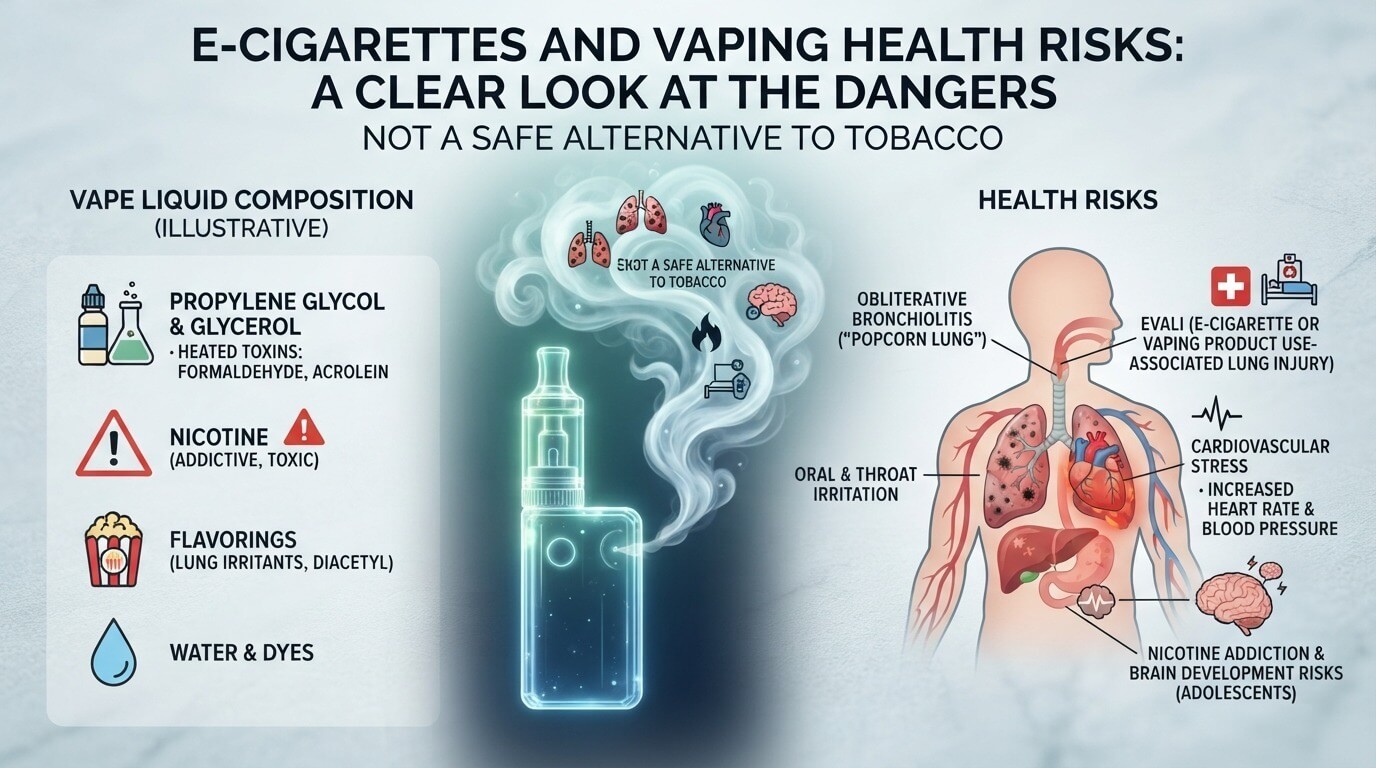
Vaping liquids contain numerous harmful and toxic substances that are potentially hazardous to health. These include carcinogens and mutagens that can negatively affect human mucous membranes. E-cigarette vapors contain fewer toxins than tobacco products, but they are still sufficient to cause harm to the body.
The Main Components of E-Cigarette Liquid
| Substance | Description |
| Propylene glycol | This substance is classified as an additive from the class of dihydric alcohols. It is used in cosmetology, medicine, pharmacology, and the food industry. Many researchers claim it is safe for the body and has no side effects. However, the effects of inhaling propylene glycol have not been studied. |
| Glycerol |
This component is a polyhydric alcohol. It is used in the production of:
This additive is harmless until heated to 280°C. However, in vapes, it can reach 350°C. As a result, people inhale hazardous, toxic substances and their combustion products. |
| Flavorings | Synthetic and natural components are added to smoking cartridges and liquids. These impart a specific flavor to e-cigarette vapor, with approximately 8,000 varieties. The safety level of flavorings depends on the components, origin, and manufacturing process. However, these compounds are not intended for inhalation and can harm the lungs and bronchi. |
| Nicotine | This substance is believed to be the cause of cigarette addiction. It also negatively impacts the cardiovascular system and promotes the development of malignant tumors. Stores offer a wide variety of smoking cartridges and liquids with varying nicotine levels. The nicotine in these liquids is usually synthetic. Artificial nicotine is highly toxic and therefore causes health problems. |
Without liquid, a vape cannot generate vapor, so liquid is essential for e-cigarettes. Liquid contains not only harmful but also neutral components, such as water and dyes. Vape liquids contain up to 3.6% nicotine, and the level must be marked on the packaging. There are four main types of vaping liquids:
-
classic – equal parts of propylene glycol and glycerin;
-
“Ice Blade” – 95% dihydric alcohol and 5% distilled water, gives a tobacco flavor;
-
The most popular is 70% glycerin and 30% propylene glycol;
-
“Velvet Cloud” – 80% glycerin and 20% distilled water, capable of producing a lot of steam.
When using vapes and regular tobacco products, remember to take into account the accumulation of harmful substances in the body. It’s better to use natural detoxification products.
Ayurvedic remedies help maintain youth and strengthen the immune system using medicinal herbs. Chyawanprash has antioxidant effects and helps reduce the effects of stress and heavy workloads on the body. Indications for use:
-
weakening of the immune system;
-
acute and chronic respiratory diseases;
-
bronchitis, tuberculosis, asthma;
-
insomnia;
-
chronic cough and runny nose.
Chyawanprash contains amla, cypress, and saffron. These ingredients are rich in vitamins and minerals, which generally support overall health. Emblica supports hematopoiesis, normalizes gastrointestinal function, and may reduce the risk of atherosclerosis.
Saffron inhibits the activity of pathogenic bacteria, destroys viruses, and reduces the risk of allergies, which are listed among the dangerous consequences of e-cigarette use. This extract may help prevent cancer and improve vascular elasticity. Saffron relieves spasms, promotes oxygen delivery to body cells, and supports heart function.
Smoking vs. Vaping: How E-Cigarettes Affect the Body
Up to 1,500 different additives are used in the production of tobacco products. Each cigarette contains approximately 1 mg of nicotine, while a 2 ml bottle of e-liquid contains approximately 24 mg. This amount is enough for four refills. When using regular tobacco products, a person can control the amount of nicotine they consume. When vaping, it is impossible to accurately determine the amount consumed.
A 2019 study by the American Heart Association revealed the truth about vaping. According to a paper published by the organization, the harms of e-cigarettes are similar to those of regular cigarettes. The study involved approximately 400 people aged 21 to 45. Scientists examined the vascular health of those who used e-cigarettes or regular cigarettes.
During the study, researchers conducted cardiovascular tests. A report was published showing that health outcomes were similar between regular and e-cigarette users. Both groups had low blood oxygen levels, noticeable negative changes in blood vessels, and high vascular hardness.
Vaping differs from regular cigarettes in its variety of vapor flavors and the absence of the unpleasant odor of smoke. The inhaled substance typically has a sweet, non-irritating aftertaste. The pleasant aroma and the fact that vaping is legally permitted encourage many adolescents to use nicotine-containing products.
E-cigarettes help avoid the negative effects of tobacco combustion products on the human body. However, vaping releases numerous other toxic compounds that are potentially or actually dangerous to human health.
E-cigarettes should not be considered a safe alternative to traditional cigarettes. Smoking and vaping deplete nitric oxide (NO) in the body. NO helps maintain oxygen levels in the blood, regulates blood vessel size, and reduces stress and the risk of thrombosis.
Electronic gadgets and tobacco products are particularly harmful to the heart, respiratory system, and immune system. They also affect the endocrine, reproductive, and other internal systems.
Health Consequences of Vaping
Vaping is surrounded by numerous myths about its safety. However, no dose of nicotine is safe. In 2019, the media began frequently reporting on a pneumonia-like lung disease. This new illness, called EVALI, has affected approximately 2,500 people, including 68 deaths.
The US Centers for Disease Control and Prevention (CDC) published information on its website stating that approximately 70% of the cases were men, with an average age of 25. It was discovered that all the victims had used vaping devices. The dangers of e-cigarettes have been confirmed by numerous clinical and fatal cases associated with them.
Research has identified e-cigarettes containing THC (a psychoactive compound) and vitamin E acetate as the cause of the illness. Scientists have discovered that vapes and related products were manufactured without proper safety precautions. Research has revealed negative health consequences:
-
There’s a high risk of developing obliterative bronchitis (“popcorn lung”). Diacetyl, a chemical found in 75% of vaping additives, causes it. Obliterative bronchitis was first discovered in workers at a popcorn company. They inhaled diacetyl, which narrows the bronchioles, scars lung tissue, and causes various inflammatory conditions.
-
Allergy. Propylene glycol, found in e-cigarette liquids, can cause individual intolerance and irritation. Depending on exposure severity, allergic reactions can develop and progress to pustule formation.
-
Poisoning. Heating propylene glycol and glycerin produces formaldehyde and acrolein in the human body. Formaldehyde depresses the nervous system. Acrolein irritates the respiratory mucous membranes and the visual organs.
-
Addiction. The lack of restrictions on vaping in public places allows people to vape at any time. This leads to addiction, but it’s unclear how many people can successfully quit.
-
High blood pressure. This causes hypertension and increases the risk of stroke. Scientists claim that problems with heart rhythm, pulse, and blood pressure are what e-cigarettes can cause with regular use.
In 2019, a 17-year-old man in Canada was diagnosed with the early stages of “popcorn sickness.” The teenager had been vaping for several months and then developed an elevated heart rate, cough, and shortness of breath. After testing, doctors considered a lung transplant. Doctors saved the patient thanks to corticosteroid therapy.
Obliterating bronchitis is caused by a variety of factors. The risk of developing it increases due to organ transplants, arthritis, viruses, and infections. However, “popcorn sickness” is often triggered by inhaling harmful compounds from smoking liquid—ammonia, HCl, diacetyl, Cl, and sulfur dioxide.
Some electronic vaping devices are small but contain nicotine levels equivalent to a pack of regular tobacco products. Studies have examined their effects on the human body, including negative impacts on memory, slower brain function, decreased concentration, and reduced self-control.
The safety of e-cigarettes has been discredited due to the presence of nicotine and other harmful substances in smoking mixtures. For detoxification, it’s better to use organic products. They are considered an Ayurvedic remedy based on plant extracts. Triphala’s active ingredients include:
-
Amla – normalizes heart function and blood glucose levels, strengthens the immune system;
-
Haritaki – has a rejuvenating effect on the body, improves vision, removes toxins;
-
Bibhitaki – normalizes gastrointestinal function and metabolic processes.
Regular use improves overall health and helps relieve inflammation and pain. Triphala tablets benefit the joints and skin. They have antioxidant properties that help the body eliminate waste, toxins, and pathogenic bacteria.
In 2020, the American Heart Association conducted an experiment to determine the health effects of e-cigarettes, which are advertised as safe. The study, conducted over three months, involved 18 rats exposed to nicotine vapor, tobacco smoke, and regular air from an inhaler for 120 minutes per day.
As a result, 14 rodents showed significant lung and bronchial abnormalities, as well as respiratory problems. One of the rats died from severe tracheal inflammation. The study also revealed wheezing and increased lethargy in the animals.
Long-Term Risks and Device Hazards of Electronic Cigarettes
A vape differs from an e-cigarette in appearance and in whether the e-liquid can be replaced. The former consists of a box containing a circuit board and a special cartridge, while the latter resembles a regular tobacco product. A vape can be used repeatedly, while an e-cigarette cannot be refilled. The main difference between both devices and a regular cigarette is the heating process.
E-cigarette liquid contains carbon monoxide. This substance binds to hemoglobin much better than oxygen. The resulting chemical reaction can cause anemia. E-cigarette liquid also often contains the same harmful compounds found in tobacco products. These include benzopyrene, hydrogen cyanide, acrolein, and formaldehyde. Smoking and vaping cause:
-
Lung cancer – research confirms that tobacco and vaping are responsible for 90% of deaths from this disease;
-
chronic bronchitis – about 75% of deaths from emphysema (the presence of air in tissues not intended for it) occur from smoking;
-
Cardiovascular diseases – tobacco and vaping are the cause of 25% of deaths from heart attacks.
Research shows that smoking regular cigarettes and e-cigarettes affects every organ in the body. Several explosions involving nicotine devices have also been reported. In one incident in the United States in 2018, a victim died from brain damage caused by shrapnel from the device.
Is Vaping Actually Less Harmful?
Researchers have studied the effects of tobacco on the human body for over 400 years. However, e-cigarettes first appeared about 20 years ago, so research on their effects is relatively new. To obtain reliable results, researchers need to study vaping over several generations. However, research has already uncovered a significant number of facts about the harms of e-cigarettes.
The WHO classifies vapes as nicotine delivery devices. The health organization believes there is no reliable evidence of the benefits or harms of e-cigarettes. There is also no evidence to support the effectiveness of vaping as a treatment for nicotine addiction.
Research shows that using e-cigarettes as a means of quitting smoking can have a counterproductive effect. Vapes can provide pleasure, but they also deliver numerous toxic substances and cause psychological dependence. The effects on the body depend on the type of e-liquid.
Some ingredients used in vape juice are GRAS-licensed, meaning they are used in the food industry. They are safe for certain uses but can harm the human body when exposed to high temperatures.
You can eliminate toxins by taking supplements based on natural ingredients. They promote healing while eliminating harmful toxins from e-cigarettes. The product’s effects:
-
Improvement of skin condition – occurs due to detoxification of internal organs, normalization of cholesterol and glucose levels, strengthening of vascular walls;
-
Losing excess weight – restoring and maintaining your figure begins with activating your metabolism and improving your gastrointestinal tract;
-
Improvement of vision, memory, attention – occurs due to the normalization of the activity of the brain and nervous system;
-
Body cleansing – thanks to its antioxidant properties, the drug removes harmful substances from cells;
-
Strengthening the immune system – occurs due to the normalization of metabolic processes and restoration of organs’ protective functions.
Vaping works similarly to an inhaler; too frequent use can negatively impact the lining of the mouth and throat, causing dryness and irritation. If you want to quit smoking, it’s best to consult a doctor and find the right therapy. This approach will help you quit nicotine addiction as painlessly and comfortably as possible.
Modern research has partially proven the harm of e-cigarettes and vaping liquids. They claim that vaping negatively impacts the respiratory system, heart, and other organs. The long-term effects of e-cigarettes are unknown, but scientists are conducting research into the harm caused by vaping devices.