The Complete Guide to Oolong Tea: Varieties, Benefits, and Brewing Secrets
The ability to brew tea leaves to reveal the full range of flavors is considered a true art by the Chinese, requiring training in knowledge passed down from one generation to the next.
Oolong tea occupies a special place among the various varieties of black, red, and green tea, the benefits of which are confirmed by a history spanning more than five centuries and a geography of consumption that encompasses countries in both the Old and New Worlds.
What is Oolong Tea? History and Origins
The first mentions of the varieties in question date back to the 17th century.
There are many legends in China, each offering its own version of its origin, but over the years, neither historians nor tea experts have been able to come to a definitive conclusion.
The starting point is considered to be Fujian province, whose producers, seeking to avoid the imperial monopoly, decided to change the technology for producing raw materials.
By the early 18th century, Chinese oolong tea, whose beneficial properties were widely promoted by Dutch traders, first reached Europe. Initially sold as a novelty potion, the drink became a favorite among royalty.
The expansion was also facilitated by the marriage between the British King Charles II and the Portuguese princess Catherine of Braganza.
Due to the fact that the newlywed wife highly valued various types of tea, English trading companies also began to supply it, which ultimately led to its spread not only throughout the continent, but also overseas.
Oolong tea is known by several names: oolong, turquoise tea, precious tea, and black dragon tea. It grows in only three places in China: the aforementioned Fujian, Guangdong, and Taiwan.
How Oolong Tea is Made: Harvesting and Fermentation
Fermentation of tea involves the use of a special technology: the leaves are collected from the tea bush after they have ripened.
Interestingly, the type of leaves harvested greatly influences quality and value. For example, flushes with a bud and 1, 2, and 3 leaves are considered the most valuable, as they can be steeped multiple times, infusing the tea infusion with ever-increasing flavors.
Oolongs made from the large, fleshy lower 4-5 leaves are considered less expensive – the taste is rich, but a little rougher and usually does not withstand more than 3-5 steepings.
The resulting raw material is dried in the open sun for 1-1.5 hours, after which it is placed in special baskets placed in a shady area.
The material is stirred and kneaded with the same frequency, which makes the fermented edges of the leaves more pronounced.
Fermentation temperatures of up to 45°C are considered lightly fermented—light oolongs. However, if an additional step—called “roasting”—is added, increasing the temperature to 70°C—this category is considered “dark.”
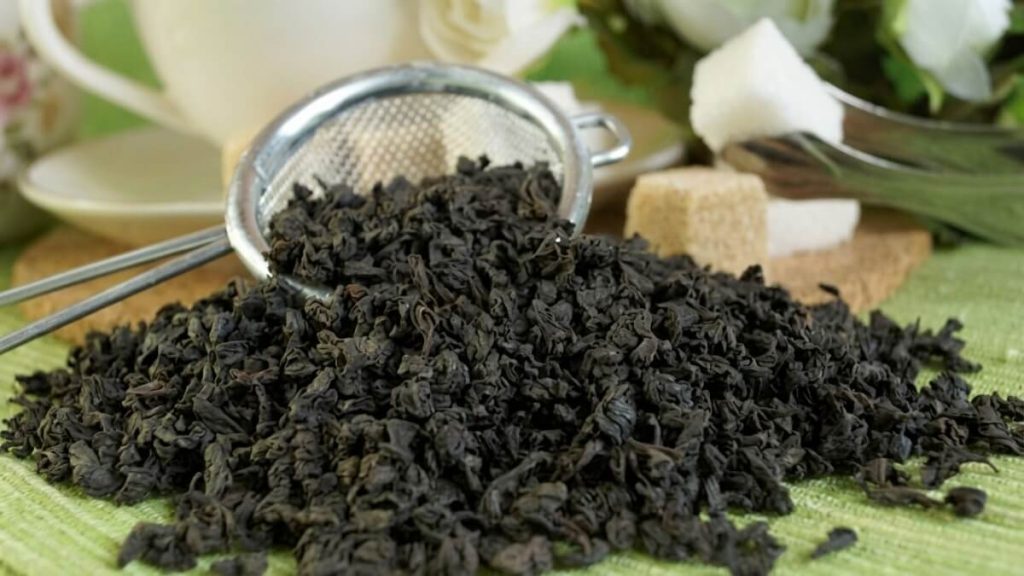
The duration of aging is determined by the requirements of the particular tea variety. The final phase is drying, which gives oolong tea its characteristic twisted shape, density, and elasticity.
It’s worth noting that the difference between genuine varieties is the integrity of the leaves and the absence of dust and crumbs that could spoil the drinking experience.
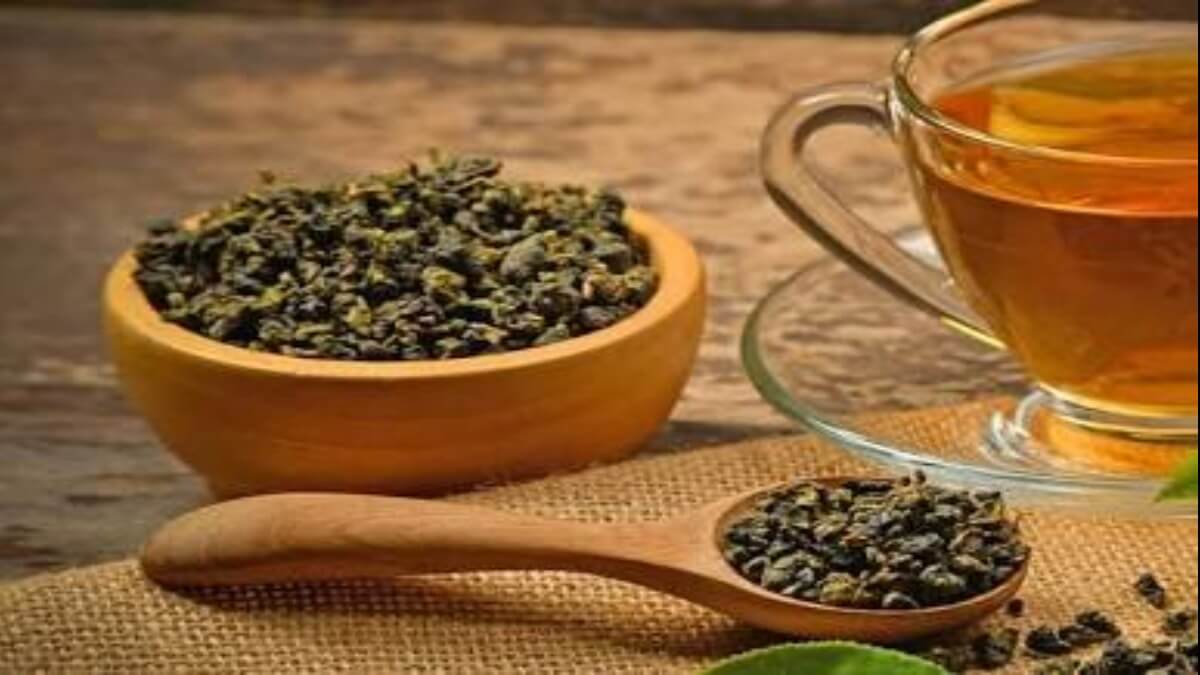
During the brewing process, they unfold, returning to their original state, exuding a distinct aroma and imparting a rich and vibrant flavor to the liquid.
Popular Varieties of Oolong Tea
The diversity of varieties is one of the main factors behind the worldwide demand for this ancient Eastern drink. Based on the production technology, four main categories are distinguished.
Highly Fermented (Dark) Oolongs
It is generally accepted that members of this group appeared earlier than others. High-altitude varieties are most in demand. Bushes growing in the Phoenix Mountains, as well as on one of the slopes of Wuyi, are distinguished by dense, succulent, dark leaves that provide a distinctly spicy flavor with a sweet aftertaste.
Lightly Fermented (Green) Oolongs
High-altitude tea bushes are also commonly used to produce lightly fermented beverages. These light-colored oolongs have a delicate green hue, a fresh aroma, and a flavor with floral notes of orchids and lilac. Among the most well-known varieties are:
- “Tieguanyin” (Fujian) is a stunning aroma of flowers – orchids and lilacs, a sweet honey taste and an incredible state of lightness and positivity.
- Taiwan Dong Ding Oolong is a Taiwanese oolong tea with a delicate straw-colored infusion that offers a soft flavor with a vibrant floral aftertaste with hints of lilac.
Tea leaves typically appear as light green spheres with varying degrees of curl, which open when exposed to hot water. Whole leaves often have a stalk. When dried, the aroma is similar to that of classic green tea varieties.
The finished infusion takes on a hue ranging from bright yellow to pinkish and can have a thick, rich texture. The flavor profile features herbal and floral notes.
Flavored and Milk Oolongs
A separate category is varieties with an enhanced aroma, which is achieved by using various extracts, including ginseng, rose and flower petals, as well as pieces of berries and fruits.
Most of it is made in Taiwan – local producers are distinguished by their love of creating unique experimental tea varieties, combining classical and modern processing techniques.
Perhaps the most famous representative of this group is Nai Xiang Jin Xuan – bred in 1980, today it is among the popular varieties, on par with Pu-erh and Tie Guan Yin.
There is a theory that the characteristic taste that milk oolong tea has is the result of spraying the tea bushes with a special mixture based on milk and sugar, or is achieved by soaking the shoots in it before drying.
In fact, the production process is not much different from the usual idea, and the refined aroma and unusual aftertaste are a result of oxidation and withering during fermentation.
Aged Oolong Teas
For varieties with extended aging, lightly fermented raw materials are used, which is why these teas often have a similar name and appearance, also appearing as twisted dark brown balls with various shades.
Harvesting usually takes place in the autumn, as this is when the drink acquires an optimal balance of aroma and taste.
Tea leaves are aged naturally, using a special technology that increases their value, or through heat treatment.
When dry, they have a distinct spicy aroma, intertwined with woody, coffee and chocolate notes.
The taste is rich and invigorating, with hints of honey and dried fruit, as well as a slight hint of pepper, creating a memorable and long-lasting aftertaste.
Among the popular types, it is worth highlighting Lao Tie Guan Yin and Lao Cha Wan.
Oolong Tea Nutrition and Chemical Composition
The list of substances contained in the structure of fermented leaves clearly explains the benefits of oolong tea.
Among the elements that have a positive effect on the condition of the human body are:
- vitamins B, K, C, D and E;
- calcium and phosphorus;
- iron, iodine and selenium;
- manganese and zinc;
- flavonoids and antioxidants;
- tannins, catechins, caffeine and essential oils.
The complete list contains about four hundred nutrients that have a beneficial effect.
In addition, tea drinks are low in calories – per hundred grams, depending on the chosen variety, there are only 130-150 kcal, so even regular consumption will not lead to weight gain.
Health Benefits of Oolong Tea
Research shows that the effects of drinking oolong tea are comparable to those of the most expensive types of white tea.
One of the factors behind its popularity is the already mentioned low calorie content, which, combined with the active breakdown of fats, helps to normalize the general condition of the body.
Of course, Chinese tea drinks are not a universal remedy, or, even more so, a medicinal one; if you actively eat them with cakes and muffins, the desired result is unlikely to come.
However, oolong tea is healthier than green tea and has more properties than concentrated juices.
If you replace your usual daily drinks with it, then, in combination with diet and exercise, you can restore your physical fitness much faster.
This is due to the content of polyphenols in the fermented tea, which block the enzymes responsible for fat deposition, as well as catechins, which help speed up metabolic processes.
Another important factor is the presence of antioxidants, which prevent premature aging and help maintain a fresh and attractive appearance.
Strengthening and restoring vascular tone, reducing cholesterol, and normalizing blood pressure—these are the benefits of Chinese oolong tea, whose properties and health benefits are so prized by Eastern centenarians.
Benefits of Oolong Tea for Women
It’s believed that one of the main secrets to beauty lies not in cosmetics or plastic surgery, but in a diet rich in natural foods. For example, in the case of the tea category under consideration—tea from the highlands of China—collagen restoration is noted, which has a positive effect on cell health and improves skin elasticity.
It’s also important to remember the weight loss effects that come with a comprehensive program, both due to the microelements it contains and by regulating your metabolism.
In addition, the beneficial properties of oolong tea for women include improved overall tone, a feeling of vigor and positive mood, replenishment of energy reserves, and the relief of accumulated fatigue.
Benefits of Oolong Tea for Men
From the perspective of improving men’s health, especially in older age, it is worth considering such characteristic effects as:
- Stimulating the immune system to fight viral diseases.
- Removal of toxins and waste that impair vascular patency.
- Creating conditions for the stable functioning of vital body systems.
Does Oolong Tea Help with Weight Loss?
As already mentioned, the beneficial and harmful properties of oolong tea, regardless of the amount consumed, will not help you lose excess weight (or gain it, for that matter).
The desired results can only be achieved with a comprehensive approach. However, it’s worth noting that individual components of tea leaves stimulate fat burning and metabolic processes.
Caffeine Content in Oolong Tea
The lower concentration – compared to coffee and green tea – allows the use of lightly fermented varieties as a way to gradually wean off the grain drink.
This is especially true for those who suffer from systematic addiction and at the same time experience problems with high blood pressure.
However, it should be taken into account that specific characteristics are largely determined by accompanying factors – from the variety and growing conditions to the method of collecting and processing the leaves.
In addition, the caffeine dose in one cup is determined by the temperature of the water used for brewing – the higher it is, the more caffeine your body will receive during your next tea session.
Side Effects and Contraindications: Who Should Avoid Oolong Tea?
A priori, tea drinks—when consumed correctly—are the most harmless and safe of all possible beverages. However, when it comes to truly fermented varieties, the effect may differ from what you expect. Therefore, it’s best to check in advance how to brew and drink a particular tea.
The presence of theine—a combination of tannin and caffeine that is absorbed by the body quite slowly—is the reason for several recommendations. Although it is not addictive, it is recommended to refrain from frequent consumption:
- For young children – due to excitability of the nervous system.
- Adults with high blood pressure and heart problems.
- For pregnant and lactating women.
How to Brew Oolong Tea Properly (Temperature & Steeping Guide)
Properly preparing tea reveals not only its flavor but also its beneficial properties. Moreover, the technique is not particularly difficult, especially for those with at least a basic understanding of traditional Chinese Gong Fu Cha ceremonies.
The choice of method depends primarily on the variety chosen, as well as the degree of fermentation of the leaves. Lightly fermented varieties are brewed with water at 60-80°C, as hotter water suppresses the aroma and flavor.
Steeping time ranges from 20 seconds to three minutes using the pour-over method: the first infusion is steeped for 20 seconds, and subsequent infusions are steeped twice as long – 40 seconds, 1 minute 20 seconds, and 2.5 minutes. For highly fermented and aged teas, both the heating temperature (up to 90°C) and steeping time are increased.
The choice of teaware deserves special attention. Glass teapots don’t retain heat very well, so clay or porcelain options are recommended.
The standard formula for calculating the volume is to use a third of the teapot’s volume, with two of that volume submerged. On average, 2 teaspoons equals approximately 200 ml. Let the first infusion steep for about 15 seconds, then drain and refill. This can be repeated 5-7 times.
Conclusion: Choosing the Best Oolong Tea
Oolong tea, the benefits and harms of which for women and men have long been studied by European scientists, remains one of the most popular in the world.
Today, you can easily treat yourself to a cup of this refined beverage, enjoying its pleasant aroma and vibrant flavor—just order the right variety from the Tea Company online store.