Feijoa Fruit: Health Benefits, Nutrition, Contraindications, and How to Eat
Exotic berries are healthy and can be a delicious addition to your regular diet. But they do have some contraindications, which we discussed with an expert.
What are the benefits and risks of feijoas, how do you choose them, and how much can you eat?
What Is Feijoa?
Feijoa (also known as pineapple guava) is the fruit of an evergreen tropical tree from the myrtle family. The German botanist Friedrich Sellow discovered it in Brazil in 1815, and 75 years later, the fruit was brought to Europe. Beginning in 1914, the first plantations appeared in Georgia and Azerbaijan.
The fruit’s flesh is sweet and sour, with a pleasant strawberry-pineapple flavor. Feijoa grows on shrubs. Incidentally, the plant’s petals are also edible—they add flavor and aroma to dishes and drinks. The dark green berries weigh 30–120 g.
The fruit’s peel is much more tart than the flesh, so it is sometimes discarded. However, it is edible and healthy and is often used in certain recipes, such as various chutneys. The peel adds a distinctive floral aroma to desserts. Feijoa’s distinctive aroma comes from the volatile esters methyl benzoate, ethyl benzoate, and ethyl butanoate. Although these complex compounds are found in other fruits, feijoa has a high percentage of methyl benzoate, a unique characteristic of the fruit.
Nutritional Value of Feijoa (per 100 g)
-
Calories: 55–61 kcal (up to 183–230 kJ)
-
Protein: 0.6–0.7 g
-
Fats: 0.4 g
-
Carbohydrates: 8–15 g
Top 8 Health Benefits of Feijoa
Besides their pleasant taste and aroma, feijoas are very beneficial for the body. The fruit has antioxidant, anti-inflammatory, antifungal, and antimicrobial properties, contains many vitamins, and suits those trying to normalize their weight. Scientists have shown that compounds in feijoa may help support cancer prevention and strengthen bones. Remember that, like any exotic fruit, these berries can cause allergies. Therefore, it’s best to try them in small portions the first time.
1. Antioxidant Properties
Thanks to its high vitamin C, B, and E content, along with bioflavonoids (historically referred to as vitamin P), feijoa has antioxidant activity comparable to most berries. The fruit contains many beneficial flavonoids—substances that activate protective enzymes when ingested. A 2019 study confirmed feijoa’s high antioxidant activity.
2. Rich Vitamin and Mineral Profile
Feijoa is a valuable source of vitamin C (33–63 mg/100 g FW) and pantothenic acid (0.2 mg/100 g FW). In a scientific article by European scientists about the study of feijoa, in addition to cellulose and pectin substances (up to 40% of dry matter), the high content of many elements beneficial for the body is indicated (percentage of daily value per 100 g):
-
iodine: 10–40 mcg / 100 g (about 18% of the daily value);
-
potassium: 6.9% of the daily value;
-
silicon: 56.7% of the daily value;
-
boron: 47% of the daily value;
-
chromium: 14% of the daily value;
-
vitamin C: 40 mg / 100 g.
The fruit’s nutritional content depends on its ripeness and where it was grown. For example, feijoa is rich in iodine if the bush was grown in coastal regions where the air and soil are rich in this micronutrient.
3. Antimicrobial Activity
Scientists tested extracts from various parts of the feijoa plant (stems, leaves, and fruits) against eight bacterial strains. Researchers concluded that most antimicrobial activity comes from seed and fruit extracts. Another study confirmed that feijoa peel also demonstrates strong natural antibacterial activity in laboratory tests.
4. Anti-Inflammatory Properties
Researchers from the University of Auckland studied the properties of 12 fruits and berries. They found that feijoa and blackberries showed the strongest anti-inflammatory effects. The study identified fruit compounds that could be explored as medicinal components to help manage inflammatory bowel diseases and other inflammatory conditions.
5. Antifungal Agent
Studies confirm that feijoa fruit extracts are effective against several types of fungi. Among the tested specimens, Rhizoctonia solani, a pathogenic plant fungus common worldwide, was found to be the most sensitive to the flavone’s action.
6. Suitable for Healthy Eating and Digestion
Feijoa benefits digestion and has a mild laxative effect. Given its low-calorie content, it suits those trying to normalize their weight.
7. Strengthening Bones
Scientists have shown that a glycoside of an acid found in the leaves of Acca sellowiana increases bone mineralization. Experiments explored its potential for osteoporosis prevention. As a result, researchers confirmed that feijoa extract increases mineralization in cultured human bone cells.
8. Cancer Prevention Potential
A natural flavone (a member of the flavonoid family) from feijoa has shown anticancer properties in laboratory studies by inhibiting histone deacetylase (HDAC). Scientists report that this flavone acts selectively against tumor cells while sparing healthy cells in preclinical testing.
Side Effects and Contraindications of Feijoa
“For overweight people, fruit consumption should be limited, and feijoa is no exception,” comments nutritionist Md. Ismail Hossain. Excess weight is often associated with carbohydrate metabolism disorders. This means that excess sugars, particularly fructose, can negatively impact underlying health conditions. High fructose intake can interfere with leptin signaling, dulling the feeling of satiety and leading to increased appetite and overeating. Therefore, it’s best not to overindulge in feijoa; a couple of berries as a morning dessert is sufficient.
Feijoa should be excluded from the diet or strictly limited if you are prone to allergic reactions, have peptic ulcers, hyperacidity, thyrotoxicosis (hyperthyroidism), obesity, or diabetes. Be sure to discuss this with your doctor.
How to Choose and Store Ripe Feijoas
Feijoas are picked unripe for transportation. Otherwise, they can easily be damaged during transit. While it’s assumed that feijoas will ripen during transit, this isn’t always the case. A tasty, ripe fruit’s skin, although firm, yields slightly when pressed with your fingers. Unripe berries have opaque white-greenish flesh, while ripe ones have a translucent, jelly-like texture, firmer beneath the skin and softer toward the center. A ripe feijoa spoils within 2–5 days, so it’s best not to buy too much feijoa. If you’ve bought a lot and don’t have time to eat it, you can make jam or freeze the berries—they’ll keep that way for about a year.
How to Eat Feijoa
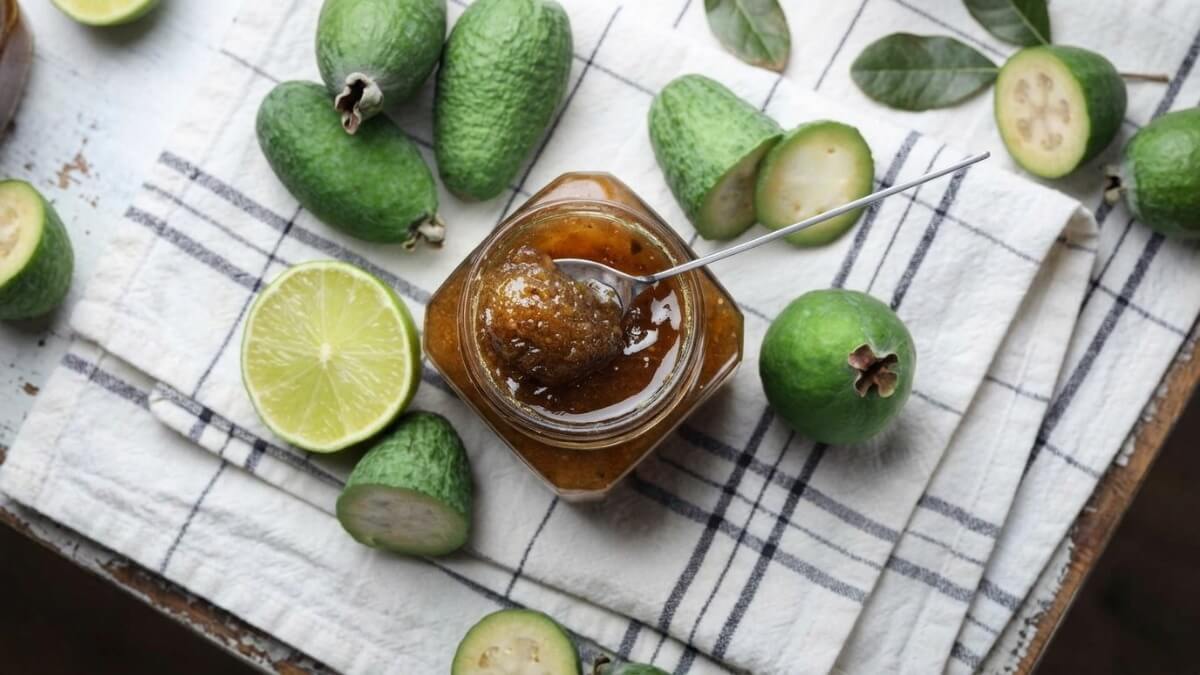
You can eat feijoa whole, sliced, scooped out with a spoon, or grated. -You can also use it to make jam and add it to desserts like muffins and ice cream. You don’t need to peel feijoas; just wash the skin thoroughly—it’s edible. Some people don’t like its distinctive tart flavor. In that case, you can try drying the skin and adding it to tea; it will impart a unique flavor without the bitterness. Most of feijoa’s nutrients—except heat-sensitive vitamin C—are preserved when cooked, so you can use it to make sauces, compotes, and even liqueurs.
Expert Commentary: Pregnancy, Children, and Daily Intake
Feijoa is rich in vitamins and microelements, including high amounts of vitamin C (along with vitamin B3/PP, which supports antioxidant metabolism), iron, and iodine. These nutrients are essential during pregnancy. Therefore, eating feijoa is especially beneficial starting in the second trimester, when the fetus’s endocrine system, particularly the thyroid gland, is actively developing. There are no direct contraindications to eating feijoa during the first trimester. However, it’s best to choose seasonal berries and fruits that grow locally. Discuss any new foods you’ve tried during pregnancy with your doctor if you haven’t tried them before.
Feijoa can also be included in the diet of older adults, but only if there are no contraindications. It benefits both the immune and cardiovascular systems. In addition to the contraindications listed above, feijoa should not be given to children under one year old due to its high pectin and fiber content. At this age, the digestive system is not yet ready for such coarse fiber, which may cause discomfort.
The fruit is most beneficial when eaten during its ripening season. The longer the berry is stored, the fewer beneficial elements it contains, as light, oxygen, and temperature degrade vitamin C and iodine, which are abundant in it. Mashed, and especially heat-treated, feijoa goes beyond being a healthy food to simply delicious. Store ripe berries in the refrigerator for no more than a week, out of direct light. Adults should eat 2–3 large feijoas per day, while children should eat no more than 1–2 feijoas, depending on age.
Key Takeaways: Brief Theses About Feijoa
-
Botanical profile. Feijoa is a tropical fruit (berry) with sweet-and-sour pulp and a distinctive strawberry-pineapple flavor. Its unique aroma comes from its high content of volatile esters, particularly methyl benzoate.
-
Exceptionally high iodine content. Feijoa is a valuable source of iodine (up to 18% of the daily value per 100 g), making it particularly beneficial for the thyroid gland and recommended during the second trimester of pregnancy.
-
Vitamin and antioxidant profile. The fruit is rich in vitamins (especially vitamin C) and flavonoids, which provide strong antioxidant activity and help strengthen the immune system.
-
Proven bioactive properties. Laboratory and preclinical research confirms the anti-inflammatory, antimicrobial, and antifungal properties of feijoa extracts, as well as potential support for bone mineralization and cancer prevention.
-
Uses and peel. Feijoa can be eaten whole, including the peel, which is edible but tart. It can be dried and added to tea.
-
Selection considerations. The fruit is picked unripe for transportation. A ripe fruit yields when pressed, has translucent, jelly-like flesh, and lasts only 2–5 days.
-
Harm and contraindications. Consumption should be limited by people with excess weight, diabetes, and carbohydrate metabolism disorders due to its natural sugar content. Contraindicated for children under one year of age (due to the fiber) and those with thyrotoxicosis.
-
Heat treatment and storage. Most of feijoa’s beneficial properties (except heat-sensitive vitamin C) are preserved when cooked in jams and compotes. To preserve its nutrients, store ripe berries in the refrigerator for no longer than a week, away from light.
-
Daily intake. The recommended daily intake for adults is 2–3 large fruits per day; for children, no more than 1–2.
-
Benefits during pregnancy. It is especially beneficial during the second trimester, when the fetus’s thyroid gland is actively developing and needs iodine.