Dietary Fiber: Health Benefits, Daily Intake, High-Fiber Foods, and Weight Loss
We try to account for protein, fat, and carbohydrate intake to ensure a balanced diet. But we often forget about another important element: fiber. Let’s explore fiber’s benefits.
What Is Dietary Fiber?
Dietary fiber provides few calories and isn’t digested by human digestive enzymes in the small intestine. However, nutrition labels do list dietary fiber under total carbohydrates. Why shouldn’t fiber be overlooked, and what are its benefits?
Top Health Benefits of Fiber
-
Fiber is processed by beneficial intestinal microflora and helps maintain stable digestive function.
-
Fiber reduces hunger, which helps you avoid overeating and control your weight.
-
Soluble dietary fiber regulates blood sugar and cholesterol levels, while insoluble fiber helps move waste through the digestive tract.
-
In February 2019, The Lancet published a World Health Organization-commissioned meta-analysis of nearly 250 studies confirming the protective effects of dietary fiber. Approximately 25–30 grams of fiber in the daily diet reduces the risk of heart disease, heart attacks, strokes, type 2 diabetes, and colon cancer by 15–30% (16–24% in key cardiovascular and cancer outcomes).
-
According to research indexed in the US National Library of Medicine, eating a diet rich in fiber reduces mortality from infectious and respiratory diseases by 24 to 56% in men and by 34 to 59% in women.
How Much Fiber Does the Body Need Per Day?
Experts believe more is better. American scientists indicate that women and men under 50 need 25 and 38 grams of fiber per day, respectively, while those over 50 need 21 and 30 grams, respectively. This is roughly equivalent to a cup of lentils, a plate of boiled beans or broccoli with butter, two pears, a large bowl of tomato and cucumber salad, a serving of vegetable soup, and a handful of prunes.
Nutritionists from the UK add that children aged 2 to 5 years require 15 grams of fiber per day, 5 to 11 years require 20 grams, and 11 to 16 years require 25 grams. The average teenager should eat 2–3 vegetables per day—these could be cucumbers, tomatoes, or carrots—the same amount of fruit (for example, bananas, kiwi, pears, apples), 1–2 slices of whole-grain toast, a serving of vegetable soup, a bowl of baked eggplant or boiled broccoli, a serving of whole-grain porridge (buckwheat, brown rice, oatmeal), and a small portion of dried fruit. Experts recommend offering children and teenagers more raw vegetables and fruits, so you can add vegetable and fruit salads and smoothies with pulp to the minimum daily allowance or use them instead of hot dishes.
How to Choose High-Fiber Foods at the Store
Experts recommend natural, high-fiber foods. For example, cereals and muesli should contain 6 grams or more of fiber per serving, bread and crackers 3 grams or more, and pasta 4 grams or more. Whole grain products should contain at least 1 gram of fiber per 10 grams of carbohydrates. The best ratio is 1:5. Nutritionists emphasize that the words “multigrain” or “12-grain” in the name alone don’t mean anything.
What Foods Are Rich in Fiber? (Top 13 Sources per 100 g)
First and foremost, eat as many natural plant foods as possible. Fresh fruits and nuts are often more expensive than regular sweets, and while you don’t always have time to prepare inexpensive grains, beans, and lentils, this helps you maintain a balanced diet.
Experts consider the following to be leaders in fiber content (per 100 g of dry/raw product):
-
Wheat bran — 43.6 g of fiber per 100 g of product.
-
Chia seeds — 34.4 g.
-
Dried fruits (figs, dried apricots) — 18 g.
-
Almonds — 12.5 g.
-
Buckwheat groats — 11.3 g.
-
Dark chocolate — 10.9 g.
-
Oats (oat flakes) — 10.6 g.
-
Artichokes — 8.6 g.
-
Peas — 8.3 g.
-
Barley, oatmeal, and pearl barley groats — 8.0 g.
-
Lentils and chickpeas (dry) — 7.9–10.7 g.
-
Raspberries, gooseberries, blackberries — 6.5 g.
-
Beans (cooked) — 6.4 g.
Fiber for Weight Loss and Belly Fat Control
Soluble fiber helps combat belly fat, one of the most dangerous types of obesity, according to experts. Adding 10 grams of plant fiber to your daily diet reduces the risk of excess weight gain by 3.7%.
Fiber keeps gut flora healthy, reduces the production of hunger-related hormones, and slows the movement of food through the intestines, helping you avoid overeating.
As with most weight-loss methods, a fiber-rich diet alone is not enough to lose weight and maintain results. Overall health, dietary habits, sleep quality, and physical activity must also be considered.
To add fiber to your daily diet, eat as many natural plant foods as possible. Fresh fruits and nuts are often more expensive than regular sweets, and while you don’t always have the time to prepare inexpensive grains, beans, and lentils, this will help you maintain a balanced diet.
If you decide to lose weight with fiber, you should pay attention to:
-
raw and cooked vegetables;
-
whole grain cereals, muesli;
-
oatmeal;
-
soups with vegetables, beans, or legumes;
-
vegetarian stews made from different types of beans and vegetables;
-
salads with seeds, berries, and grains.
Nutritionists also recommend snacking on broccoli, carrots, beans, or cauliflower, seasoned with hummus or fresh salsa, and adding nuts, berries, and fruit to plain, sugar-free yogurt.
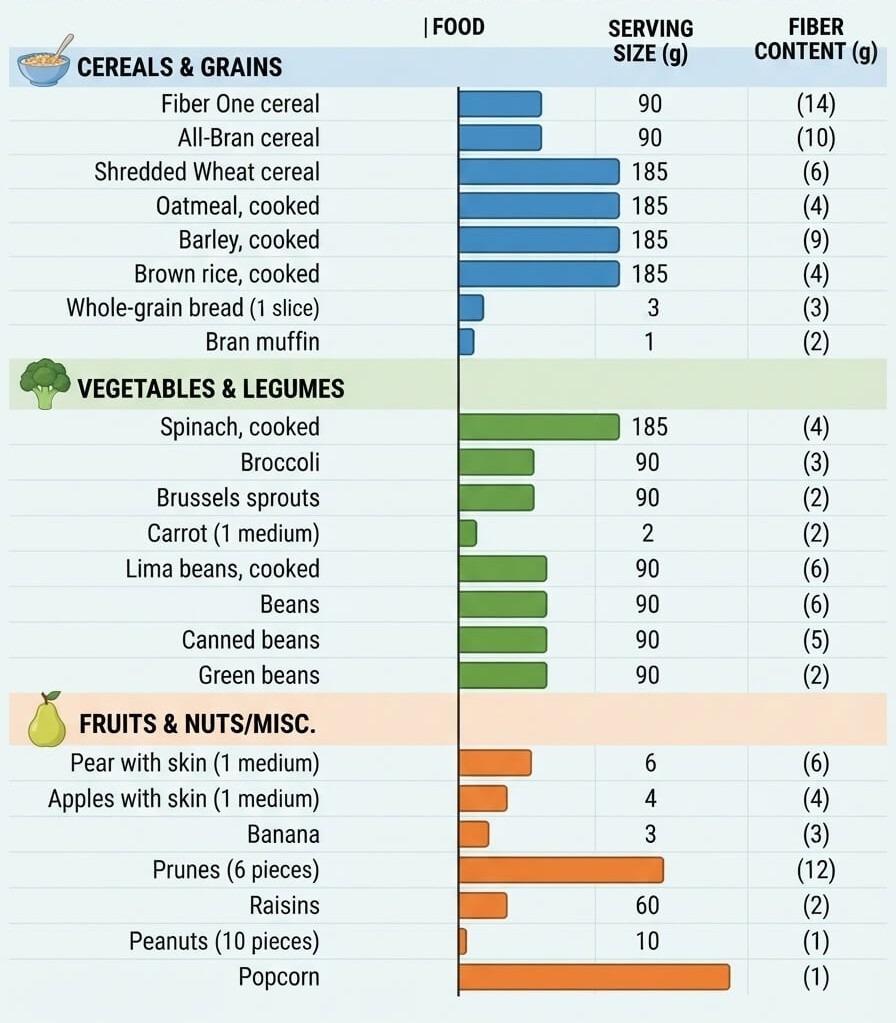
How to determine the approximate amount of fiber in a serving of food:
Sample High-Fiber Daily Meal Plan (Approx. 32.5 g)
The UK National Health Service gives an example of a high-fiber diet (approximately 32.5 grams of fiber per day):
-
Breakfast: Two slices of whole grain toast, a banana, and a glass of fruit juice contain 9.4 grams of fiber.
-
Lunch: Potatoes baked in their skins, 200 grams of beans in tomato sauce without added salt and sugar, and an apple — 13.6 grams of fiber.
-
Dinner: Vegetable curry with tomato sauce, onions, and spices; whole-grain rice; low-fat fruit yogurt — 6.5 grams of fiber. Since yogurt can be high in sugar, check the ingredients.
-
Snack: A handful of unsalted, unsweetened nuts — 3 grams of fiber.
Important Safety Rules When Increasing Fiber Intake
-
It will take time for the body to get used to a large amount of fiber, so it is worth increasing its proportion in the diet gradually;
-
You need to drink more water to help digestion;
-
The fiber in raw vegetables can irritate sensitive stomachs and intestines;
-
Before changing your diet, you should consult your doctor, especially if you have any health problems.
Brief Theses on Fiber
-
Definition and benefits. Dietary fiber is not digested by human enzymes and provides minimal energy. It supports digestive function, reduces hunger, and helps regulate blood sugar and cholesterol levels.
-
Reduced risk of disease. Daily consumption of approximately 30 grams of fiber reduces the risk of heart disease, heart attacks, strokes, type 2 diabetes, and colon cancer by 16–24%.
-
Recommended daily intake. The recommended daily intake for adults under 50 is 38 grams for men and 25 grams for women. For children and adolescents, the recommended daily intake ranges from 15 to 25 grams.
-
Fiber for weight loss. Soluble fiber helps fight belly fat. An additional 10 grams of fiber per day reduces the risk of weight gain by 3.7%. Fiber slows the movement of food, helping control appetite.
-
Leaders in content. The richest sources are wheat bran (43.6 g/100 g), chia seeds (34.4 g), dried fruits (figs, dried apricots), almonds, buckwheat, and oatmeal.
-
Sources (general). For a balanced diet, eat as many natural plant foods as possible: raw/cooked vegetables, legumes (lentils, beans, peas), and whole grains (bread, cereals, muesli).
-
Product selection. When purchasing whole-grain products, check the fiber-to-carbohydrate ratio: aim for at least 1 gram of fiber per 10 grams of carbohydrates. The terms “multigrain” or “12-grain” do not guarantee high fiber content.
-
Guidelines for implementing this into your diet. Increase your fiber intake gradually to allow your body to adjust. Drink plenty of water to aid digestion and avoid discomfort (bloating).