11 Top Superfoods: Health Benefits, How to Use Them, and Easy Recipes
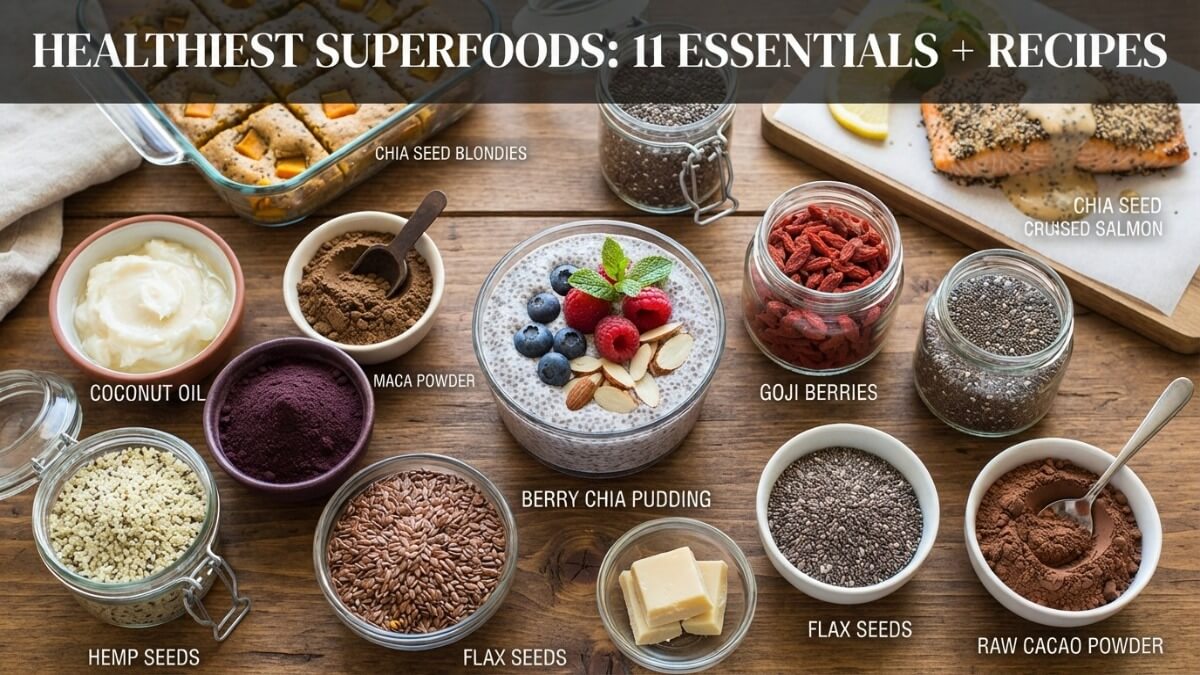
To help you navigate the plethora of superfoods, we’ve compiled a list of the healthiest and most impressive ones, along with recipes showing you how to use them.
1. Coconut Oil
Beneficial properties: Contains lauric, capric, and caprylic acids, includes small amounts of vitamins E and K, and has antimicrobial properties. Supports mineral absorption and oral hygiene (such as oil pulling for teeth and gums). Helps support skin barrier repair, boosts immunity, and fits into a balanced diet when used in moderation. Improves energy metabolism and helps combat oxidative stress.
Application: This wonderful, versatile product can replace other vegetable oils in cooking and be used in moisturizing masks for hair, face, and the entire body.
2. Chia Seeds
Health benefits: Rich in omega-3, fiber, antioxidants, and minerals. Helps lower cholesterol, keeps you feeling full longer, and is gluten-free.
Directions: Add 1–3 tablespoons daily to smoothies, yogurt, and salads. When soaked in water or milk, they expand, making them ideal for puddings.
Recipe: Berry Chia Pudding for Breakfast
-
¼ cup chia seeds
-
¾ cup almond milk
-
½ cup berries
-
2 dates, pitted
-
½ teaspoon vanilla extract, or vanillin to taste
Method of preparation: Soak chia seeds in almond milk overnight. The next day, puree with berries, dates, vanilla, and enough almond milk to achieve the desired consistency (like thick yogurt). Serve with fresh berries.
Recipe: Chia Seed Blondies
-
1 medium-sized banana
-
250 g peeled pumpkin
-
2 tablespoons chia seeds
-
½ teaspoon of baking soda
-
1 tsp baking powder
-
1 heaped teaspoon of cinnamon
-
¼ teaspoon ground ginger
-
ground cloves on the tip of a knife
-
¼ tsp nutmeg
-
¼ cup sweetener (stevia, agave, or cane sugar are fine)
-
2 tbsp coconut oil
Method of preparation: Combine the dry ingredients in a bowl. Blend the banana and add it to the dry mixture. Add the coconut oil and pumpkin and blend thoroughly until smooth. The mixture should be sticky. Line a baking sheet with parchment paper and place the dough on it. Roll it out to 1 cm thick and cut into portions. Bake in a preheated oven at 180 degrees Celsius (350 degrees Fahrenheit) for 20–25 minutes, until done.
Recipe: Chia Seed-Crusted Salmon
-
400 g salmon fillet (one strip)
-
½ cup chia seeds
-
¼ cup sesame seeds
For the sauce:
-
1 teaspoon of honey
-
1 tbsp olive oil
-
Lemon zest, salt, and pepper to taste
Method of preparation: Combine chia seeds and sesame seeds in a bowl. Roll the fish in the seeds. Place the fish on a baking sheet and bake for 12–15 minutes, until cooked through. Prepare the sauce: mix the honey, olive oil, and lemon zest, and season with salt and pepper. Serve the fish drizzled with the sauce.
3. Maca Powder (Peruvian Ginseng)
Lepidium meyenii, known as Peruvian Ginseng or maca powder, is a biennial herbaceous plant from the cruciferous family that grows in the Andes. Farmers harvest it at altitudes of at least 4,000 meters. When buying this high-altitude superfood, check the packaging. Look for “gelatinized” or “organic vegan maca powder”—gelatinized maca is pre-cooked to remove starch, making it more easily absorbed.
Beneficial properties: Rich in B vitamins and vitamin C, it contains calcium, zinc, iron, magnesium, phosphorus, and amino acids. It supports endocrine balance and may help increase libido. It supports women’s health and mood, boosts energy, and promotes overall vitality.
Directions: Add to smoothies, plant-based milkshakes, warm drinks, energy bars, and cookies. Start with 1 teaspoon to 1 tablespoon daily, then increase every few days up to 1–3 tablespoons daily.
Recipe: 5 Maca Powder Energy Bar Options
#1. Apple-Cinnamon: 1–2 tbsp maca powder, 0.5 cup walnuts (pre-soaked in water and dried for better absorption), 0.5 cup almonds (also soaked and dried), 1 cup dates, 1 cup dried apples, 1.5 tsp cinnamon, 1–2 tbsp water.
#2. Gingerbread Cookies: 1–2 tbsp maca powder, 1.5 cups cashew nuts (soaked and drained), 1.5 cups dates, 1.5 tsp ginger powder, ¾ tsp cinnamon, ¼ tsp cloves, 1–2 tbsp water as needed.
#3. Lemon-Lime: 1–2 tbsp maca powder, 1 cup cashew nuts (soaked and dried), 1 cup dates, 0.5 cup coconut flakes, ½–1 tsp citric acid (or lemon zest), 2 tbsp lime juice.
#4. Coconut Cream: 1–2 tbsp maca powder, 1 cup macadamia nuts (soaked and dried), 1 cup dates, 0.5 cup coconut flakes, ¼ tsp vanilla extract.
#5. Chocolate Chip Cookies: 1–2 tbsp maca powder, 2 cups cashews (soaked and drained), 1 cup dates, 2 tsp vanilla extract, 2 tbsp chocolate chips, 1 tbsp water as needed.
Method of preparation (4 bars): Place all ingredients in a blender or food processor and blend until smooth. Open the lid and check the texture: if it sticks to your hand and forms a bar easily, it’s ready. If the texture is a little loose, add 1 teaspoon to 2 tablespoons of water and blend again. When the mixture is ready, transfer it to parchment paper and form into bars. Wrap each bar in paper or plastic wrap and refrigerate until ready to use.
4. Acai Berry Powder
Acai berries grow on palm trees in the Amazon rainforest. In recent years, these small, round, dark purple berries have become a cult favorite among health food enthusiasts.
Health benefits: They contain antioxidants (especially anthocyanins) that protect the body from free radicals; are rich in fiber, fatty acids, and amino acids; contain vitamins A, B1, B2, B3, and E; and provide calcium, magnesium, zinc, and copper.
Directions: Add 1–2 teaspoons (up to 1 tablespoon) daily to water, freshly squeezed juices, smoothies, plant-based milkshakes, yogurt, or sorbet.
Recipe: Acai Smoothie for a Coffee Break
-
1 tbsp acai powder
-
1 banana
-
150 ml natural yogurt or plant milk
-
1 tsp honey (optional)
Method of preparation: Blend all ingredients on high speed until thick. Transfer to a bowl, add the muesli, and sprinkle with cinnamon.
5. Goji Berries
Health benefits: Goji berries are a natural source of antioxidants, which boost immune function and reduce fatigue. They are also rich in beta-carotene (provitamin A) and zeaxanthin, which are essential for skin and vision.
Directions: 2–4 tablespoons (about 15–30 g) daily. Eat raw, soak in water (drink the water afterward, as some water-soluble nutrients leach out during soaking), or blend into a smoothie.
6. Hemp Seeds
Health benefits: A source of essential fatty acids, including omega-3 and omega-6. Contains an easily digestible complete plant protein compared to many animal and plant foods. Rich in fiber and minerals, including magnesium, iron, zinc, potassium, and vitamin E.
Application: Add 2–4 tablespoons a day to juices, smoothies, porridge, and salads.
7. Flax Seeds
Beneficial properties: A source of trace elements, amino acids, dietary fiber, manganese, potassium, vitamins E and B1, and essential omega-3 fatty acids (ALA). Promotes digestive regularity, heart health, and overall well-being.
Directions: Add to smoothies and porridge. Makes a great egg substitute in baked goods (1 tbsp ground flax + 3 tbsp water = 1 “flax egg”). Grind into powder right before use for better absorption.
Recipe: Salad with Flax and Hemp Seeds
-
1 cup spinach
-
1 celery stalk
-
1 small boiled beetroot
-
3 cherry tomatoes
-
Parsley greens
-
1 tbsp hemp seeds
-
1 tbsp ground flax seeds
-
1 tbsp olive oil, hemp oil, or liquid vegetable oil
-
Sea salt and pepper to taste
-
Lemon juice
Method of preparation: Chop the salad ingredients, mix them, add the seeds, salt, and pepper to taste, then drizzle with lemon juice. Enjoy!
8. Spirulina (Blue-Green Algae)
Health benefits: Stimulates and strengthens the immune system, supports cognitive function, increases energy and metabolism, helps lower LDL cholesterol, supports heart health, and promotes digestion and gut health. Rich in antioxidants (phycocyanin), plant protein, and iron (and iodine if harvested from marine sources).
Directions: Take tablets with water, or add powder to freshly squeezed juices, smoothies, shakes, or yogurt. Recommended daily dose: 1–2 teaspoons (3–10 g).
9. Wheatgrass Juice Powder
Beneficial properties: Has antioxidant properties, supports cellular recovery, aids natural detoxification, is a good source of chlorophyll, vitamins A, K, and E, and antioxidants. Strengthens the immune system and increases energy. (Note: Nursing mothers should consult a doctor before using concentrated wheatgrass supplements.)
Directions: Take 1–2 teaspoons of powder per glass of water or freshly squeezed juice.
10. Raw Cacao Powder
Raw cacao powder is obtained by cold-pressing unroasted cacao beans. This process preserves natural enzymes and polyphenols and separates the cocoa butter.
Beneficial properties: Supports healthy blood flow and circulation. Rich in flavanol antioxidants, it neutralizes free radicals. Cacao is also a good source of iron, magnesium, potassium, and B vitamins. It can improve mood and digestion and has a calming, relaxing effect. It’s an excellent healthy alternative for sweet cravings.
Directions: 1–3 tablespoons daily. Make a hot cacao drink (add 1–3 tablespoons cacao powder to warm water or milk), or add it to smoothies, porridge, or baked goods.
Recipe: Vegan Chocolate Ice Cream
-
4 bananas
-
3 tablespoons raw cacao powder
-
Honey, berries (optional)
Method of preparation: Slice the bananas and freeze for 1–2 hours. Then remove from the freezer, add cacao powder, and blend until creamy. When serving, drizzle with honey and add berries, if desired.
11. Cocoa Butter
Health benefits: An excellent source of healthy monounsaturated (omega-9) and saturated fatty acids, natural polyphenols, and vitamin E that support skin health and the immune system.
Application: Use in raw food desserts, energy bars, as a cooking fat replacement, in face and hair masks, and as an after-shower body oil.